Slow Cooked Duck Curry with Peach Chutney and Vegetable Pilau


Slow cooked Duck Curry


Vegetable Pilau


Peach Chutney


We are in the big dry.  A whopping 80% of the State of NSW is now officially drought declared with the Central Tablelands, within which Orange lies, the latest victim of these harrowing statistics.  We had only 25mm of rain last month (November) and it has been hot.  The same month the previous year delivered around 135mm of rain without these hot temperatures.  Evaporation at this time of year generally exceeds rainfall anyway - 135mm of rain, 145mm evaporation - so it always appears dry  but this summer is exceptional.  There has been no rain so far this month. The golden hills of straw have begun to turn brown with hot winds thirstily sucking every last drop of moisture out of all in its path including my veggie beds. I have had difficulty getting my summer vegetables going.   I put in lots of seeds - carrots, lettuce, beetroot, rainbow chard, radishes and other spring goodies directly into the raised beds but very little germinated.  The soil had become dry. I re-sowed and have tried to keep the water up with some success but the soil dries out so quickly it is quite a challenge, particularly as we are still away in Sydney every couple of weeks.  I'm continuing to water the fruit trees with washing up water, scooping the last cupful out of the sink,  and now I take a bucket into the shower too.  Every bucket full is a tree watered.  My heart goes out to the farmers.  The odd bucket full of water won't help them much.  To compound my sadness, we saw the cattle off to the sale yards this afternoon. They had eaten the last blades of dry grass and were being hand fed - an expensive exercise.  The paddock below looks a little empty without them.


Delivering a bale of hay for hungry cows
(the concrete water tank that will service the main house in the back ground)

Despite all this, I feel this is truly God's country.  It's beauty and serenity scarcely diminished by the hot, dry, dusty summer conditions.  When we sit out on the verandah of our little cottage in the evening, look over the hills that roll along for miles and feel the cool mountain air on our faces, the heat of the day becomes a distant memory. 

It's hard to imagine that we are sitting bang in the middle of the crater of a huge volcano that stopped breathing probably some millions of years ago, but we actually are.  The rich volcanic soils and the (usually) cool mountain climate is ideal for growing food and I love it here.  The main house is nearing completion, the plasterers and tilers are in there right now and a late March to early April move-in is now imminent.  Look out for lots of cooking and blogging when I have a real kitchen!

In the meantime I manage reasonably well (albeit with a little frustration) with a couple of hotplates in the little cottage kitchen, making chutneys, sauces and preserves to take advantage of the lovely local produce.  Totally Local, my favourite place for anything I don't grow yet, have begun stocking duck.  I bought one a little while ago, cut it  into portions, roasted the breasts and froze the remainder.  Served with fresh vegetables from the garden, roasted pear and a sauce made with my quince paste, the duck breast was delicious.  A couple of days ago, I felt I needed a curry fix and with all that duck taking room in the freezer it was the obvious choice.  I don't normally use duck for curries, but was encouraged to do so by John Byrne asking me a little while ago if I had a duck curry recipe.   I hadn't so John sent me one.  John is a self proclaimed fan of my books and through his questions and suggestions via e-mail we have become friends.  He is also now a fellow blogger with some wonderful recipes on his blog Easy Cooking Easy Recipes.

I have not followed John's recipe yet but I have definitely drawn inspiration from it.

Slow Cooked Duck Curry

This is an easy recipe that produces a rich spicy curry that is even better when eaten the next day.  So if time permits cook it the day before you intend to eat it to let the flavours develop.  The fruity sweetness of the peach chutney is ideal with this curry but mango or any other sweet chutney would be also be good.

Duck has a lot of fat under the skin and as you can see from the picture, there is quite a bit of oil on top of the sauce.  I spooned at least two tablespoons of it off the top before serving the curry and unless you like your curries quite greasy, it's a good idea to do that.  Or you can remove the skin and discard it after you have browned the duck pieces to reduce the oilyness.

Serves 4

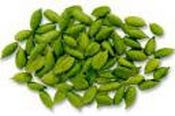
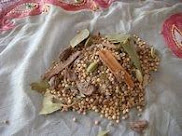
Spice blend: Grind or pound to a fine powder 1 tsp fennel seeds, 2cm piece cinnamon, 2 cloves, 4 green cardomoms, 1 tsp coriander seeds, 1 tsp cumin, ½ tsp black peppercorns. 

1 duck approx 1.8-2.0 kg in weight
3 large cooking onions, roughly chopped
4 large cloves garlic, peeled and chopped
Thumb sized piece of ginger, peeled and chopped
2 or more green chillies, chopped
1-2 tbsp olive oil
1 tsp turmeric
1 tsp sugar
2 fresh ripe tomatoes, chopped
1 ½ -2 tsp salt to taste
½ tsp garam masala
1 tbsp chopped coriander

  • Cut the duck into pieces -  2 thighs, 2 drumsticks and 4 breast pieces.  You might like to keep the wings too, but discard the wing tips.   Remove the excess fat and skin that hangs from the sides and ends of the bird, leaving only the skin on top of the meat.  Rinse well and pat dry with kitchen paper.
  • Place the onion, garlic, ginger and green chillies in the bowl of a food processor and process until finely chopped.  Set aside.
  • Heat a large heavy based sauce pan or crock pot on medium heat and spray with a little oil.  Add about half the duck pieces, skin side down and brown well.  Make sure the pan is hot enough and don't overcrowd or the duck will stew rather than brown.
  • Turn each piece over and brown on the other side.
  • Transfer browned duck pieces to a clean bowl or plate and repeat with remaining duck pieces until all the duck is nicely browned.
  • There will be quite a bit of duck fat in your pan by now.  Stir the prepared spices into the hot duck fat and cook for a minute or until aromatic.
  • Add onion mixture and a tablespoon of oil and cook on low-medium heat stirring, for about 7 minutes.  You don't need to brown the onion but add some more oil if pan seems too dry. 
  • Stir in the turmeric followed by the sugar tomatoes and salt.  Turn down the heat and cook covered for about 5 minutes, stirring once or twice until the tomatoes are pulpy.
  • Return the duck pieces and any juices to the pan and stir around the pan until all the pieces are coated in the sauce.
  • Add 3 cups of water and bring to boil.  Turn the heat to low, cover pan and simmer for 1½ - 2 hours unitl the duck is very tender and the meat is almost falling off the bone.  Stir the sauce and turn over duck pieces every 15 minutes or so during that time.
  • Stir in the garam masala and simmer for a minute.  Turn off the heat and sprinkle with fresh coriander.  Serve with chutney, rice and chappatis or nan.  Yum!
Vegetable Pilau

Unless you're serving a vegetable side dish with the duck curry, this pilau is perfect with this spicy curry. I've only used diced carrot in this recipe because that's about all I had but a combination of carrots, peas and beans would be nice. 

This method of cooking rice will produce lovely fluffy results everytime.

1 cup Basmati rice
1 tbsp ghee or olive oil
1 large or two small carrots, peeled and diced
2 tbsp finely chopped onion
4 green cardamoms
3 cloves
1¾ cups cold water
½ tsp salt

  • Wash the rice in several changes of water and leave to drain in a large sieve. Pre-heat oven to 170°C, 325°F or gas mark 3.
  • Heat the ghee or oil in a heavy based pan with a tight fitting lid and stir fry the carrot, onion and spices for 2 minutes on medium heat.
  • Stir in the drained rice and mix well to coat all the grains with the ghee or oil. Cook on medium heat for about a minute.
  • Add the water and salt and bring to the boil. Once boiling, turn the heat to very low and place the lid firmly on the pan.
  • Stir the rice after about 5 minutes, and again after about 3 minutes. Re-cover and leave for a further 4-5 minutes after which time all the water will have been absorbed.
  • Place pan in oven for about 20 minutes to dry off the rice.
  • Transfer pilau to serving dish taking care not to break the grains of rice. Fluff up with fork. Serve immediately or cool and refrigerate for later use.
  • Re-heat in a microwave oven for about 2 minutes.
Peach Chutney

This fruity chutney goes well with cold meats, cheese and sausages as well as spicy curries. You can buy bruised and misshapen fruit but it’s important that it is sweet and ripe as tasteless fruit will produce tasteless chutney.  Nectarines work well in this recipe too.

Makes about 500 ml (18 fl oz)

1 kg ripe peaches
2 large onions, sliced
200g golden raisins
250ml cold water
370ml malt vinegar
250g white sugar
2 tsp grated ginger
1 tsp chilli powder

  • Wash fruit well, remove stones and chop flesh coarsely. Place in a large heavy based saucepan with the raisins and water, bring to the boil and simmer uncovered for 20 minutes, stirring once or twice.
  • Add all remaining ingredients and bring slowly back to the boil, stirring to dissolve the sugar.
  • Simmer partly covered for about 1 hour 15 minutes, stirring occasionally.
  • Spoon the hot chutney carefully into warm sterilised jars, place lids on firmly and invert each jar for two minutes.
  • Store chutney in a cool dry place. Store in the fridge after opening

Salmon Kalia, Easy Passionfruit Ice-Cream and Super Quick Cake for Tea


Salmon Kalia
(from The New Curry Secret)


Light and delicious - sponge cake cooked in the microwave
and topped with chocolate icing and dessicated coconut


The thermometer outside is reading 38°C, inside it is a comparitively cool 29.3°C.  Less than 3 weeks ago it was so different, we had the log fire blazing each evening and were savouring winter vegetables in warming curries, casseroles and soups.  It seems like just overnight we've gone from comfort food to light salads. It has been warm to hot for several days now and it hasn't rained for a while. The ground outside my window is like a thick carpet of golden straw, except around the building area of the main house where the excavators have dug up the red clay which is now covering everything with a layer of red dust.  We are short of rain water and whilst we can buy town water I've taken to carrying a bucket with me into the shower, using the washing up water and catching anything that drips to water the trees.  My husband is not sure what to make of my new found frugality but I feel the need to conserve such a precious resource.

There's no air conditioning in the cottage and the cooking facilities are meagre taking into account my love of cooking.  We hadn't planned to spend so much time here until the house was built but it is a lovely peaceful environment in stark contrast to the fast moving rat race that is Sydney and we love it. With the ceiling fans going it is bearable as long as you don't move around too fast or cook.  Baking is definitely out!  However, we need a change from salad tonight and the cake tin is empty, and whilst I've never been a huge fan of microwaved cakes this is one of those times it seems like a great idea.  I have some curry sauce in the freezer so the Salmon Kalia will be a cynch and the ice-cream takes no effort at all!


Salmon Kalia

This tasty, satisfying curry with its origins in Bengal is traditionally made with a Carp like fish called Katla. The delicious aromatically spiced sauce is flavoured with a special spice blend called Panch Phoran (five spices) which complements the oily fish beautifully. Salmon is an excellent substitute for the traditional fish but other varieties of fish can also be used.


Serves 4

Preparation and cooking time: 20 – 25 minutes


Spice Blend
½ tsp fenugreek seeds
1 tsp black mustard seeds
1 tsp onion seeds
1 tsp fennel seeds
2 tsp cumin seeds

4 salmon cutlets or fillets about 200g (7 oz) each
1 tsp turmeric
1 ½ tsp salt or to taste
2 tbsp olive oil
1 clove garlic, finely sliced
2 tsp tomato paste (tomato puree double concentrate)
600ml (21 fl. oz) curry sauce
1 tsp paprika
3 tbsp plain yoghurt
1 ripe tomato sliced into 8 wedges (or 4 cherry tomatoes halved)
2 hot red chillies, de-seeded and sliced, or to taste
½ tsp garam masala
2 tbsp chopped coriander
  • Combine all the spices for the spice blend and set aside. Mix half the turmeric with half of the salt and rub over the fish. Set aside.
  • Heat the oil in a deep, heavy based frying pan and add the spice blend. Stir around in the hot oil for about 20 seconds until the seeds start to pop and add the garlic. Fry for another few seconds and stir in the tomato paste and remaining turmeric.
  • Stir fry for a minute and add the curry sauce, paprika and the remaining salt. Bring to the boil and cook on high for 2 minutes until thickened slightly. Turn down the heat and stir in the yoghurt. Simmer while preparing the fish.
  • Heat a separate pan capable of holding all the fish in a single layer. Cook on high heat for a minute each side or until lightly browned.
  • Transfer the fish to the sauce and turn the pieces in the sauce until each piece is completely coated. Bring to the boil and turn down the heat. Cover and simmer for 10 - 15 minutes, turning once. Stir in the tomatoes half way through.
Transfer to a serving platter or plates, sprinkle with the red chillies, garam masala and coriander and enjoy with rice.


Easy Passionfruit Ice-Cream

Everyone loves ice-cream and everyone can enjoy this without guilt.  It is low in fat yet tastes creamy and delicious.  In fact you can leave the cream out altogether and make up the quantity with evaporated milk, it still tastes great.  The passion fruit gives it a really yummy fruity aroma and flavour but you can leave it out and stir in half a teaspoon of vanilla extract instead.

Serves 8-10

225ml (8 fl. oz) sweetened condensed milk
600 ml (14 fl oz) light evaporated milk
200 ml single or double cream
6-8 passion fruits

  • Whisk the two types of milk and cream if using in a bowl until well combined and frothy. Pour into your ice-cream maker and set to churn according to manufacturers instructions.
  • Meanwhile remove pulp from passion fruit.  Press half of pulp through a sieve to remove seeds.  Discard seeds.  This is optional of course.  I don't like too many seeds so I prefer to remove some but you may choose to leave them all in or remove all of them.  It's entirely up to you.
  • Add pulp to ice-cream maker and continue to churn until ready.
If you don’t have an ice-cream maker, place the mixture in the freezer. Remove from the freezer after 30 minutes and beat with a whisk or a fork until smooth. Repeat twice more and freeze until hard.


Super Quick Cake

This takes about 15 minutes all up and is great with a cup of tea of coffee.  The olive oil helps make the sponge moist and makes it more healthy too. For a variation, I sometimes make it without the icing and include a generous amount of organic, sulphur free sultanas stirred into the cake batter for a really moist, fruity cake. 

Genuine free range eggs are essential to give the cake a nice golden colour.

6 tablespoons organic self-raising flour
4 tablespoons caster sugar
60g (2oz) cold butter
3 tbsp good quality extra virgin olive oil
2 large or 3 small free range eggs
1/2 cup organic milk
1/2 tsp vanilla extract

Chocolate Icing
3 tbsp icing sugar
1 tbsp dutch cocoa powder
1 tbsp boiling water
1 cup dessicated coconut

  • Grease a 20cm round or square microwave proof cake dish and line with baking paper.
  • Place the flour, sugar and chopped up butter into the bowl of a food processor and process for a minute or two until mixture resembles fine breadcrumbs.  Transfer to a large mixing bowl.
  • Whisk together the oil, eggs, milk and vanilla extract .  Make a well in middle of the dry ingredients and add the liquid mixture.
  • Gently fold in until well combined but do not over mix.
  • Transfer batter to cake dish and microwave on high for 5 minutes.   Allow the cake to stand for 3-4 minutes and check if cooked by inserting a skewer or knife into it.  It should come out clean.  If not, microwave at 30 second intervals until done.
  • Turn out the cake onto a wire rack and allow it to cool completely.
  • To make the chocolate icing, combine the icing sugar and cocoa and add the boiling water.  Mix well and add another tablespoon or so of cold water until you have thick, glossy easily spreadable icing.
  • Pour onto the cake and spread to cover.  Sprinkle on the coconut, slice and serve.

Cheats Samosas, Traditional Lemon Pickle & Quince Paste


A quick fix for Samosa lovers


Traditional Lemon Pickle

Notes from diary 25 August 2009.   It's been cold with some morning frosts but the weather is just starting to improve. The locals tell me that it's been a mild winter in Orange this year.  I thought it had been a very cold one.  I've clearly become too accustomed to the sub-tropical Sydney climate, and I've still got the cold winters of Orange to look forward to, brrr!.  Well it serves me right I suppose, I've been boasting to all my Sydney friends and acquaintances about what a lovely climate we have here and yes, it does have it's plusses.  The lovely warming log fires, the deeply satisfying comfort food and the beautiful winter produce.  Firm and tasty brussels sprouts, deliciously white and sweet cauliflowers, fresh and juicy unwaxed limes and lemons.  These are the things I've been buying from Totally Local and the monthly farmers markets as well as silky smooth fresh sheeps milk cheeses, aromatic locally produced olive oils, the tastiest potatoes ever and lots more that I don't have growing yet.  The cooking apples (a Russian variety I think) have been wonderful.  This is the first time I've been able to buy real cooking apples here in Australia and we've been enjoying the best crumbles and fruit pies I've had in a long time. 

Quince Paste and Jam
The quince is an unfortunate looking fruit, a bit like an ugly, oversized pear with an overcoat of some of the apples least favourable characteristics.  Raw it is colourless, odourless and tasteless and furiously difficult to prepare.  However, cooked with some sugar it becomes enticingly rosy, impossibly fragrant and deliciously fruity and sweet - a transformation nothing short of miraculous.

Foolishly I decided to buy some at the farmers markets.  I made some quince paste with half and jam with the rest - quince jam is easier to make than the paste.  The jam combined with the apples made a heavenly crumble and the paste was so delicious eaten with the local cheeses, it lasted less than a week.  A good excuse to go to lunch at Sisters Rock at Borrie's beautiful orchard and vineyard and buy a whole lot more to make a big batch.   I started on them after breakfast the next day.  I spent the entire day peeling and chopping the rock hard fruit  (after battling with the first one or two I microwaved them to make peeling and chopping easier) and boiling and pureeing and boiling the living day lights out of the resulting puree, while it bubbled and popped all over the walls and ceiling and eventually turned a rich dark brown.  Phew! I fell into bed exhausted and determined not to repeat the exercise ever again.  To make matters worse, when I went to slice it the following day, it hadn't set.  Or least the stuff in the dishes hadn't, the numerous blobs on the walls and ceiling did! I gave it another day, in hope, but had to pour the whole lot back into the pan and boil, splash and pop it some more.  I ended up with about a week's cleaning and a year's supply of delicious quince paste if I don't let the kids steal too much of it. 


If anyone's daft enough like to me to want to make quince paste and you would like the recipe, e-mail me and I will send it to you.

My winter veggie garden has been doing really well.  Winter vegetables really do need cold weather and they are just thriving in this climate.  In fact most winter veggies actually improve in flavour after being exposed to frosts and I can vouch for that - we've been enjoying the sweetest, tastiest broccoli, parsnips, baby cauliflowers and spinach that I've ever eaten..  The Chinese Broccoli (Gai Lan) has been particularly tender and tasty as have the snow peas. There have been no problems with pests or deseases and I've hardly had to water them.  After the challenges of the summer season this has been so incredibly easy.


Chinese Broccoli


The broad beans looking healthy and robust


Beetroot Bulls Blood - deep red leaves and roots, both of which can be eaten


Well, now for these Cheats Samosas.  For someone who makes quince paste why would I think of cheating on making samosas? Anyone who's made samosas 'from scratch' will tell you it is a labour intensive process.  Not quite as bad as making quince paste but never-the-less, it is time consuming.  In these time poor days most people buy ready made samosas, but they are not a patch in terms of flavour and freshness as home-made.  These Cheats Samosas are quick and absolutely delicious. 

The secret is to make your own tasty filling and use shop bought tortillas for the pastry casing.  It works well.

Cheats Samosas

I love the carrots in this recipe for added flavour and texture, but you can omit them and make up the quantity with more potato.

Makes 12 Samosas

50g (2 oz) diced carrot
150g (5oz) diced potato
2 tbs olive oil
1 onion, finely sliced
2cm piece of ginger, grated or finely chopped
1 or 2 green chillies, finely chopped
½ tsp turmeric
½ tsp of cumin seeds
salt to taste
3 tbsp frozen peas
1 tsp of ambchoor or juice or half a lemon
½ tsp garam masala
6 flour tortillas

Oil for deep frying
 
  • Boil carrot in salted water for 5 minutes and add the potato. Cook until vegetables are tender but not breaking apart. Drain.
  • Meanwhile, heat the oil in a heavy based sauce pan and add the onion. Fry for a few minutes over medium heat until beginning to colour around the edges.
  • Add the ginger, chillies, turmeric, cumin and salt and stir fry for 2 minutes. Stir in the cooked vegetables, peas, ambchoor and garam masala. Mix well over low heat for a few minutes so that the vegetables absorb the spices.
  • Turn off the heat and allow the filling to cool.
  • Dampen a tortilla by dipping briefly in warm water.  Slice in half and bring the cut sides together, slightly overlapping, to make a hollow cone. Seal by pressing the cut sides together firmly. You may need to dampen the edges with a little more water.
  • Fill about ¾ full with the potato mixture, being careful not to overfill. Pinch the open ends together firmly to enclose the filling. Set aside and repeat with remaining tortillas.
  • Deep fry in batches and drain on a wire rack.  Serve hot with Tamarind Sauce or tomato ketchup.
Tamarind Sauce:
2 tsp of tamarind paste
200 ml (7fl.oz) warm water
½ tsp salt
½ chilli powder
½ tsp garam masala
½ tsp ambchoor
1tbsp tomato ketchup
1 carrot, grated
1 tbsp diced red onion
1 tbsp of chopped coriander

Dissolve the tamarind paste in the water.  Add the remaining ingredients and mix to combine.


Traditional Lemon Pickle
There are lots of different recipes for lemon and lime pickle, with and without oil.  Home-made pickles are intensely flavoursome, much more so than most commercial brands, and it is worth making some.  This recipe is really simple and allows the fresh flavour of the lemons or limes and other ingredients to really shine through.  It is great with all sorts of food and you can even use the pickled lemon for recipes that call for preserved lemons.

Vary the quantities of ginger, chillies and garlic according to preference.

500g (1lb 3oz) lemons or yellow limes
12 red chillies
100g (3oz) ginger
1 bulb garlic
2 tsp turmeric
3 tbsp salt
1 tsp chilli powder
100ml (3 fl. oz) white vinegar or lemon juice


  • Rinse the lemons and chillies and wipe dry. Peel the ginger and slice thickly. Divide the garlic bulb in to cloves and peel.
  • Spread the ingredients out on the bench top or large tray and air dry over night or for at least 1 hour.
  • Meanwhile, rinse a large glass or ceramic jar and lid (needs to be a tight fitting one) in hot soapy water. Rinse in very hot water and dry thoroughly.
  • Combine turmeric, salt and chilli powder in a small bowl.
  • Quarter the lemons and place about a third of them in the jar. Add about a third of the garlic, ginger slices and chillies and sprinkle over about a third of the turmeric mixture.  Pour over about a third of the lemon juice or vinegar.
  • Repeat twice more with remaining ingredients.
  • Shake the jar well and place in bright light (preferable sunlight) on a window ledge or outdoors during the day if weather permits. 
  • Shake the jar at least twice daily to mix the ingredients for 7-14 days.  In hot sunny weather this pickle will be ready to eat in 7 or 8 days.
  • Store the pickle in a cool place.